How Do I Know If My Dog Has an Ear Infection? What Chicago Pet Parents Should Know

Scout Pet Urgent Care
Your dog's been rubbing his ear against the couch cushions for two days straight, and this morning there's a smell coming off it that you can't un-smell. If you're asking yourself how do I know if my dog has an ear infection, you're already looking at the answer.
Head shaking, scratching at the ears, and a foul odor are the three signs that show up first, and they rarely mean nothing. Dog ear infections are one of the most common reasons Chicago pet owners end up searching for same-day care. Ear infections rank among the top reasons dogs are brought in for a vet visit at all, not just an urgent one.
Most cases clear up fast once you catch them early. Here's what to look for, why it happens, and when it's time to get your dog seen.
What Are the First Signs of a Dog Ear Infection?
Ear infections rarely stay quiet. Most dogs will tell you something's wrong through their behavior before you ever notice a physical change.
- Head shaking or shaking their head repeatedly: This is usually the first sign owners notice, often happening in short bursts throughout the day.
- Scratching at the ears: Persistent scratching, sometimes hard enough to leave marks around the ear flap.
- Foul odor or unpleasant odor: A yeasty, sour odor coming from the ear canal is a strong indicator of infection.
- Brown, yellow, or bloody discharge: Healthy ears shouldn't produce visible discharge of any kind.
- Redness and swelling: The inside of the ear flap may look inflamed or feel warm to the touch.
- Itchy behavior: Rubbing the ear against furniture, carpet, or your leg, sometimes constantly.
Why Do Dogs Get Ear Infections?
Most canine ear infections start with bacteria or yeast overgrowth, specifically a fungus called malassezia, taking advantage of a warm, moist ear canal. Staphylococcus is one of the most common bacteria involved, though several types can trigger an infection.
A few other causes show up often too:
- Ear mites: More common in puppies, these tiny parasites cause intense itching and a dark, coffee-ground discharge.
- Food allergies: Chronic ear inflammation is sometimes the first clue that a dog has an underlying food sensitivity.
- Foreign objects or foreign bodies: Grass seeds, foxtails, and other debris picked up on a walk can lodge in the ear canal and set off an infection.
- Trauma: Aggressive scratching or a rough play session can create small injuries that let bacteria in.
- Hormonal imbalances: Conditions like an underactive thyroid can make dogs more prone to infections that keep coming back.
Floppy ears make things worse. Breeds like cocker spaniels, golden retrievers, basset hounds, and poodles trap warm, humid air against the ear canal, which is exactly the environment bacteria and fungus need to thrive.
Chicago's humid summer months, plus splashing through puddles and slush during lake-effect winters, only add to the moisture problem for dogs built this way.
Dogs who spend a lot of time swimming, whether that's Montrose Dog Beach in the summer or just puddle-jumping through a slushy Lincoln Park in January, are especially prone to trapped moisture triggering yeast overgrowth. Drying the ears thoroughly after a swim or a wet walk goes a long way toward preventing the whole cycle from starting.
Where Is the Infection: Outer, Middle, or Inner Ear?
Not every ear infection sits in the same place, and where it lands changes how serious it is.
- Otitis externa: The most common type, this is an infection of the outer ear canal, the part just past the ear flap.
- Otitis media: A middle ear infection has moved past the eardrum. It often causes more pain and sometimes a head tilt.
- Otitis interna: An inner ear infection is the least common but the most serious, and it can affect balance and hearing.
If an infection reaches the middle or inner ear, you might notice a head tilt, loss of balance, or even hearing loss. Some dogs also show new irritability once the pain reaches this level. These symptoms mean it's time to stop watching and start calling.
Could It Be Something More Than an Infection?
Occasionally, symptoms that look like a routine ear infection turn out to be something else. Polyps, and less commonly tumors, can grow in the ear canal and cause similar signs: odor, discharge, head shaking. These are rarer, but they're part of why a vet exam matters instead of guessing from home.
How Do Vets Diagnose a Dog Ear Infection?
A Scout Pet Urgent Care veterinarian starts with an otoscope exam, looking down the ear canal to check the eardrum and rule out a rupture before starting treatment. From there, cytology, a quick look at ear debris under a microscope, identifies whether bacteria, yeast, or ear mites are behind the problem.
For infections that keep coming back, culture and sensitivity testing pinpoints exactly which bacteria are involved and which medication will actually work against them. These diagnostic tests take just a few minutes and make a real difference in how fast your dog feels better, since guessing at the wrong medication can let an infection linger for weeks longer than it needs to.
How Are Dog Ear Infections Treated?
Treatment depends on the cause. Topical medication and ear drops handle most straightforward bacterial or yeast infections. If fungus is the main driver, your vet may prescribe an antifungal instead.
Mite infestations need a different medication entirely, which is part of why an accurate diagnosis matters more than a guess. Most dogs need a round of ear drops applied at home for one to two weeks, along with a recheck to confirm the infection actually cleared instead of just quieting down.
When Should I Take My Dog to a Chicago Pet Urgent Care?
A mild case of scratching after a bath can usually wait for a regular vet appointment. A head tilt, loss of balance, sudden hearing loss, or a dog who seems uncharacteristically irritable and in pain needs to be seen the same day.
Scout Pet Urgent Care offers walk-in and same-day appointments at locations across Chicago, including Lincoln Park, West Loop, Old Orchard in Skokie, and Wheaton, for exactly these situations. A regular vet can usually work you in within a few days, but a same-day ear exam means less time for a mild infection to work its way toward the middle ear.
Get Your Dog’s Ears Checked Out Today at Scout Pet Urgent Care
If your dog's ears are giving off warning signs, don't wait out a diagnosis you can get answered today. Book a same-day visit or walk into your nearest Scout Pet Urgent Care location, and get a clear answer before a simple ear infection turns into something that needs more time to treat.
Frequently Asked Questions
Can I clean my dog's ears at home before seeing a vet?
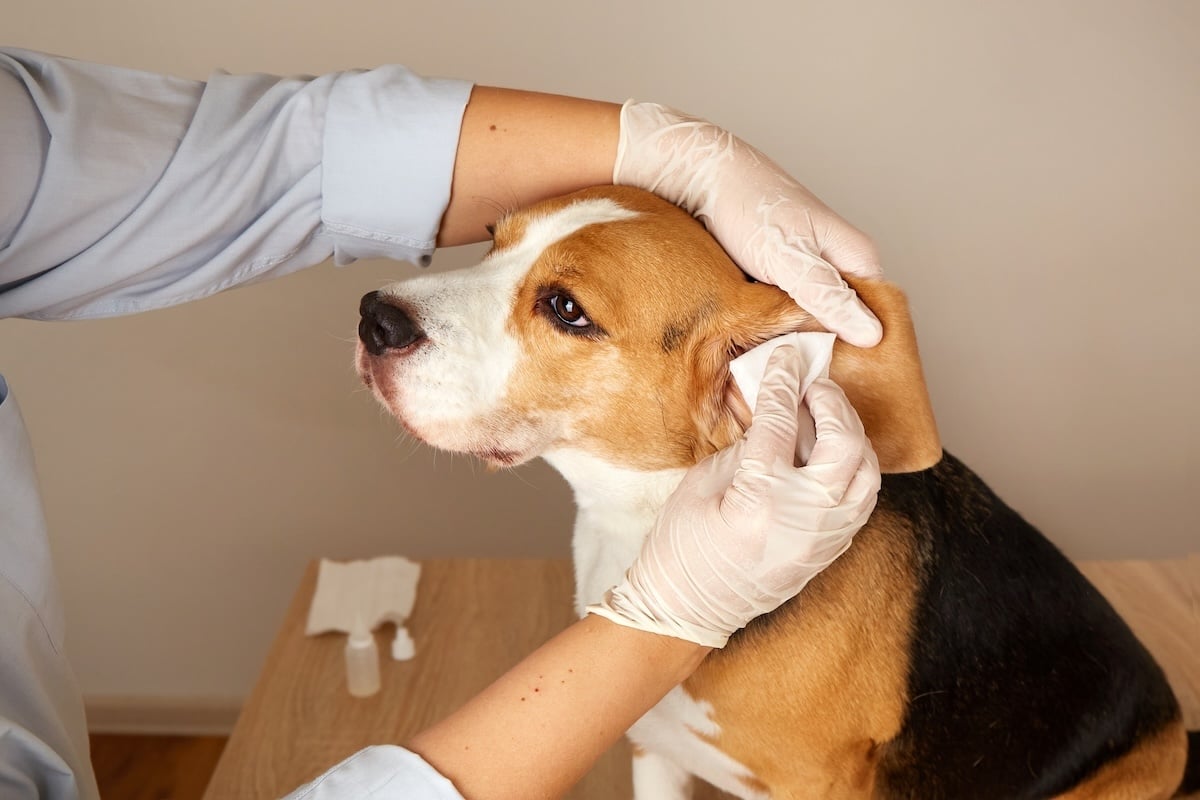
Gentle cleaning with a vet-approved solution can help with mild buildup, but skip it if the eardrum may already be ruptured or your dog seems to be in real pain. When in doubt, let a vet take a look first.
What dog breeds get ear infections most often?
Cocker spaniels, golden retrievers, basset hounds, and poodles top the list because their floppy ears trap moisture against the ear canal. Dogs with allergies are also more prone, regardless of breed.
Are dog ear infections contagious to other pets?
Bacterial and yeast infections generally aren't contagious between pets. Ear mites are the exception. They spread easily between dogs and cats living in the same household.
How long does it take for a dog ear infection to clear up?
Most straightforward infections improve within one to two weeks of starting treatment. Infections tied to allergies or hormonal imbalances tend to return if the underlying cause isn't addressed.
Can food allergies cause repeated ear infections?
Yes. Recurring ear infections are one of the more common signs of a food allergy in dogs, and it's worth mentioning to your vet if the infections keep coming back.