

Ticks on Dogs and Lyme Disease: What Every Chicago Pet Parent Should Know

Scout Pet Urgent Care
Ticks are small, but the problems they cause are anything but. If your dog spends any time outdoors, ticks are a real risk no matter the season. At Scout Veterinary Urgent Care, we want every pet parent to feel confident spotting, removing, and preventing ticks before they become a bigger problem.
The good news is that with a little knowledge and a solid prevention routine, you can absolutely protect your pup year-round. You’ve got this, and we’ve got you!
What Are Ticks, Exactly?
First things first. Ticks are not insects. They are arachnids, meaning they are more closely related to spiders and mites than to fleas or mosquitoes. There are hundreds of species of ticks worldwide, and several are common threats to dogs here in the US.
The types of ticks dog owners are most likely to encounter include:
- Deer tick (blacklegged tick): The main carrier of Lyme disease and anaplasmosis
- American dog tick (wood tick): Known for spreading Rocky Mountain spotted fever and tularemia
- Brown dog tick: One of the most common tick species found on dogs and can live indoors
- Lone star tick: Linked to ehrlichiosis and other tick-borne illnesses
Ticks go through four life stages: egg, larva, nymph, and adult. Nymphs are especially sneaky because they are tiny and easy to miss during tick checks. Adult ticks are easier to spot, especially once they have taken a blood meal and become engorged.
Where and When Do Dogs Pick Up Ticks?
Ticks love wooded areas, tall grass, and the border between lawns and trees. Dogs that spend time hiking, roaming, or playing in these environments are at the highest risk of tick infestation.
But here is something important to know: tick season is not just a summer thing! Ticks can be active year-round in many parts of the country, especially during mild winters. That means tick prevention should be part of your routine in every season.
Dogs most at risk include:
- Hunting breeds and dogs that roam off-leash
- Dogs that visit kennels or dog parks with wooded areas
- Any dog spending time outside, even in a backyard with tall grass
Tick-Borne Diseases You Should Know About
Ticks can transmit serious tick-borne diseases that affect your dog's health in a big way. Here are the most important ones to know:
- Lyme disease: Caused by the bacteria Borrelia burgdorferi and spread by the deer tick. Symptoms include lameness, joint swelling, fever, and fatigue
- Rocky Mountain spotted fever: Spread by the American dog tick and can cause serious complications if not treated quickly
- Ehrlichiosis: A tick-borne illness that affects white blood cells and can cause fever and weight loss
- Anaplasmosis: Similar to ehrlichiosis, spread by the blacklegged tick
- Babesiosis: A parasitic infection that targets red blood cells
- Tularemia: A bacterial infection spread by several species of ticks
According to the Centers for Disease Control and Prevention (CDC), tick-borne illnesses are on the rise across the US. If you notice anything unusual in your dog after a tick bite, getting them seen right away makes a real difference.
How to Do a Tick Check on Your Dog
After any time outdoors, make tick checks part of your post-adventure routine! It is a great excuse for extra snuggle time with your pup. Ticks have favorite hiding spots, so check these areas closely:
- In and around the ears
- Between the toes and paw pads
- Around the tail and under it
- Along the dog's skin on the neck, shoulders, and belly
- Around the eyelids and lips
A flat tick has been on your dog for only a short time. An engorged tick with a rounded tick's body has been feeding for longer. Either way, remove it promptly and give your pup an extra treat for being so patient!
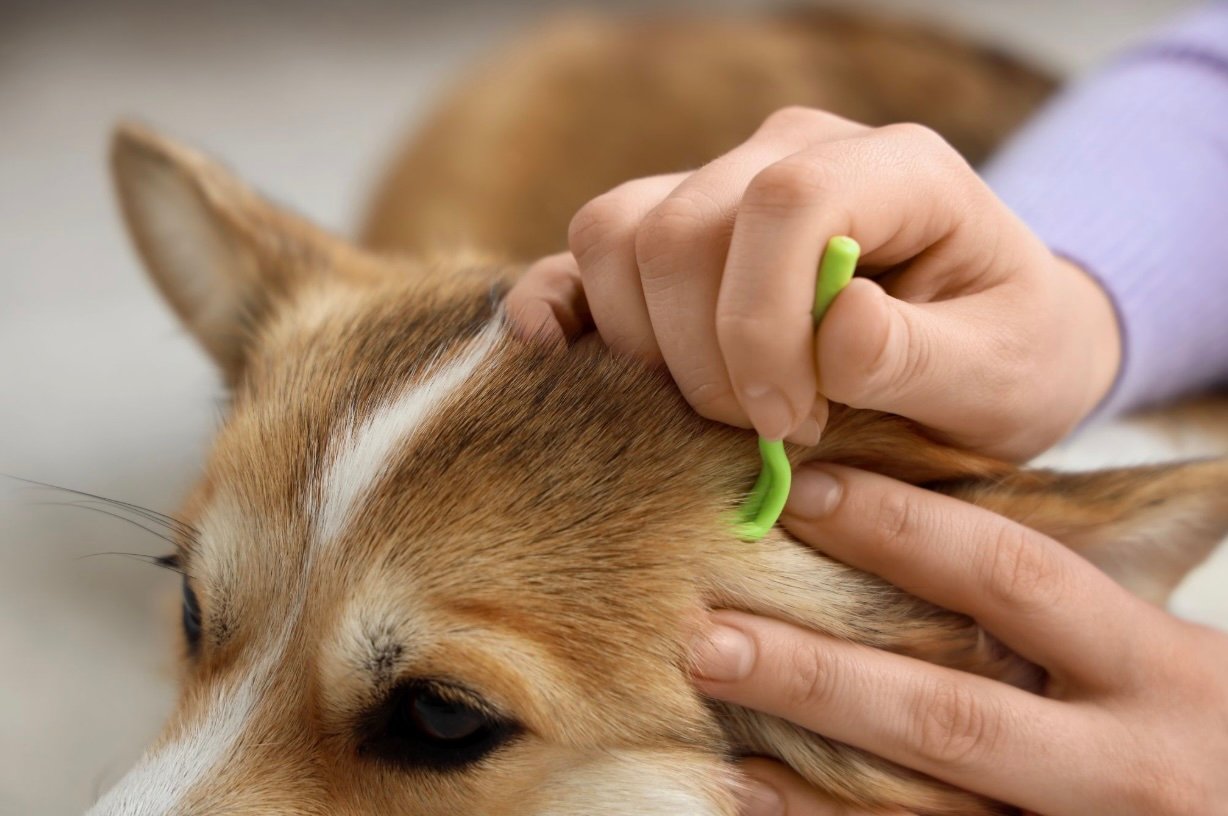
How to Safely Remove a Tick
Found one? Take a breath, you can totally handle this. Here is what to do:
- Use fine-tipped tweezers to grasp the tick as close to the dog's skin as possible
- Pull upward with steady, even pressure. Do not twist or jerk
- Avoid crushing the tick's body during removal
- Clean the bite area with rubbing alcohol after removal
- Never use your bare hands, a hot match, or petroleum jelly to remove a tick
After removal, keep an eye on the bite site. If it turns red or swells, or if your dog develops a fever or changes in behavior, visit Scout Veterinary Urgent Care right away. That is exactly what we are here for!
Tick Prevention That Actually Works
The best tick bite is the one that never happens. Here is how to keep your pup safe and tail-wagging all season long:
- Use a vet-recommended tick repellent or preventive medication year-round
- Keep your yard clear of tall grass and trim vegetation regularly
- Stick to the center of trails during hikes to avoid dense brush
- Do tick checks after every outdoor adventure
- Ask your vet about the Lyme disease vaccine if your dog is at high risk
Frequently Asked Questions
How long does a tick need to be attached to transmit disease?
It depends on the disease. Lyme disease transmission generally requires a tick to be attached for 36 to 48 hours. Other tick-borne diseases like Rocky Mountain spotted fever can be transmitted more quickly, which is why prompt tick removal is so important.
Are ticks active in winter?
Yes! While tick activity slows in very cold temperatures, ticks can be active year-round in many regions during mild winters. Year-round tick prevention is always the safest approach for your pup.
Can ticks infest my home?
The brown dog tick is the species most likely to survive and reproduce indoors. If your dog has a heavy tick infestation, contact your vet and consider professional pest control to get ahead of it.
What should I do after removing a tick?
Clean the bite site with rubbing alcohol and keep an eye on it for the next several days. Watch for redness, swelling, or any changes in your dog's behavior. If anything seems off, we are always here for you at Scout Veterinary Urgent Care.
When should I take my dog to urgent care after a tick bite?
Head to Scout Veterinary Urgent Care if your dog develops a fever, lameness, unusual fatigue, or swelling after a tick bite. When in doubt, come on in. We love seeing your pets and we are always happy to help give you peace of mind.
We Are Rooting for You and Your Pup Every Single Day
Finding a tick on your dog is stressful, and that is completely okay to feel. The important thing is that you are paying attention and taking action, and that makes you an amazing pet parent. At Scout Veterinary Urgent Care, we are genuinely so happy to be the team you turn to.
- Explore our services to see everything we can do for your dog
- Walk in during business hours, no appointment needed
- Book an appointment online and let us take great care of your pup
We are so proud to be part of the Chicago pet parent community. Come see us and let us help your pup stay safe, healthy, and tail-waggingly happy all year long!