WE CAN HELP WITH...

Hair loss

Hi there! Hair loss in dogs and cats can be confusing and the cause is not always clear. Depending on the underlying cause, this problem can be a sign of a bigger issue or nothing to be concerned about at all. Here’s how to tell if you need to seek treatment right away or just ask your veterinarian at the next check up.
Book Appointment
scout_visit_2

Symptom checker

What’s going on with your pet? Why are they going bald?

Are they allergic to something?

Just like people, dogs and cats can be allergic to pollen, dust and mold. Different from people, most dogs and cats will only show signs of their allergies in their skin. Allergic cats may develop crusts or lick their fur excessively causing bald spots. Allergic dogs may scratch all over, but especially at their armpits, belly, groin, paws and ears causing hair loss.

Are there mites or fleas?

Mites and fleas are another source of hair loss. We know what you are thinking. Not my perfect pet! We don’t even go anywhere, and I don’t see any bugs! Unfortunately, you might not actually see these parasites, only the aftermath of a bite or infestation, and it’s really easy to pick them up.It’s creepy but true! Some mites cause more itching than others, but all are treatable.

Is there crusting, flaking, pimples/pustules, or bumps?

Skin infections (also known as pyoderma) can also be really itchy and cause fur to fall out. Infections with bacteria or yeast can cause redness crusting, flaky skin, hair loss, pimples or pustules, and bumps.

Does skin look dry but no itching?

Some endocrine disorders are associated with thinning of the fur/alopecia. The majority of patients with this type of problem will not be itchy with this process but the skin may look flaky and/or dry.

How bad is it?

Here are some signs to seek treatment sooner than later: Hair loss that is associated with itching, excessive grooming or biting, Crusting or scabs, Spreading of lesions or rashes especially over the period of minutes to hours.

Are they allergic to something?

Just like people, dogs and cats can be allergic to pollen, dust and mold. Different from people, most dogs and cats will only show signs of their allergies in their skin. Allergic cats may develop crusts or lick their fur excessively causing bald spots. Allergic dogs may scratch all over, but especially at their armpits, belly, groin, paws and ears causing hair loss.

Are there mites or fleas?

Mites and fleas are another source of hair loss. We know what you are thinking. Not my perfect pet! We don’t even go anywhere, and I don’t see any bugs! Unfortunately, you might not actually see these parasites, only the aftermath of a bite or infestation, and it’s really easy to pick them up.It’s creepy but true! Some mites cause more itching than others, but all are treatable.

Is there crusting, flaking, pimples/pustules, or bumps?

Skin infections (also known as pyoderma) can also be really itchy and cause fur to fall out. Infections with bacteria or yeast can cause redness crusting, flaky skin, hair loss, pimples or pustules, and bumps.

Does skin look dry but no itching?

Some endocrine disorders are associated with thinning of the fur/alopecia. The majority of patients with this type of problem will not be itchy with this process but the skin may look flaky and/or dry.

How bad is it?

Here are some signs to seek treatment sooner than later: Hair loss that is associated with itching, excessive grooming or biting, Crusting or scabs, Spreading of lesions or rashes especially over the period of minutes to hours.

Does your pet need Urgent Care?

If you answered yes to any of the how bad is it signs OR if it seems like an infection, yes! Once itchiness turns into infection or gets so bad they can’t stop scratching, it is time for a formal evaluation.
Contact Us

Here’s what you can do at home...

 
1

Soothing baths.

This can be a good way to rid the skin of irritants and help stop the cycle of itching. Oatmeal based shampoos can be helpful.
2

Topicals.

It is tempting to put something on the area to stop the itching. This is generally safe to do unless the skin is broken. There are many over the counter products that can be safely used for itch. It is important that you do not allow your pet to lick ANY topical product without talking to a veterinarian. A good rule of thumb for any topical product is to use it on a small area first and watch for any adverse reactions. And if it doesn’t work the first time, don’t keep applying it.
3

Do they have itchy feet?

If your pet’s feet are itchy, make sure you wipe the bottoms of the feet when coming in from walking on the grass and/or use protective boots on walks. You can use a moist washcloth or unscented baby wipes.
2544d382e211bd128693452e69cea40b216b0c4c

What can you expect from your visit?

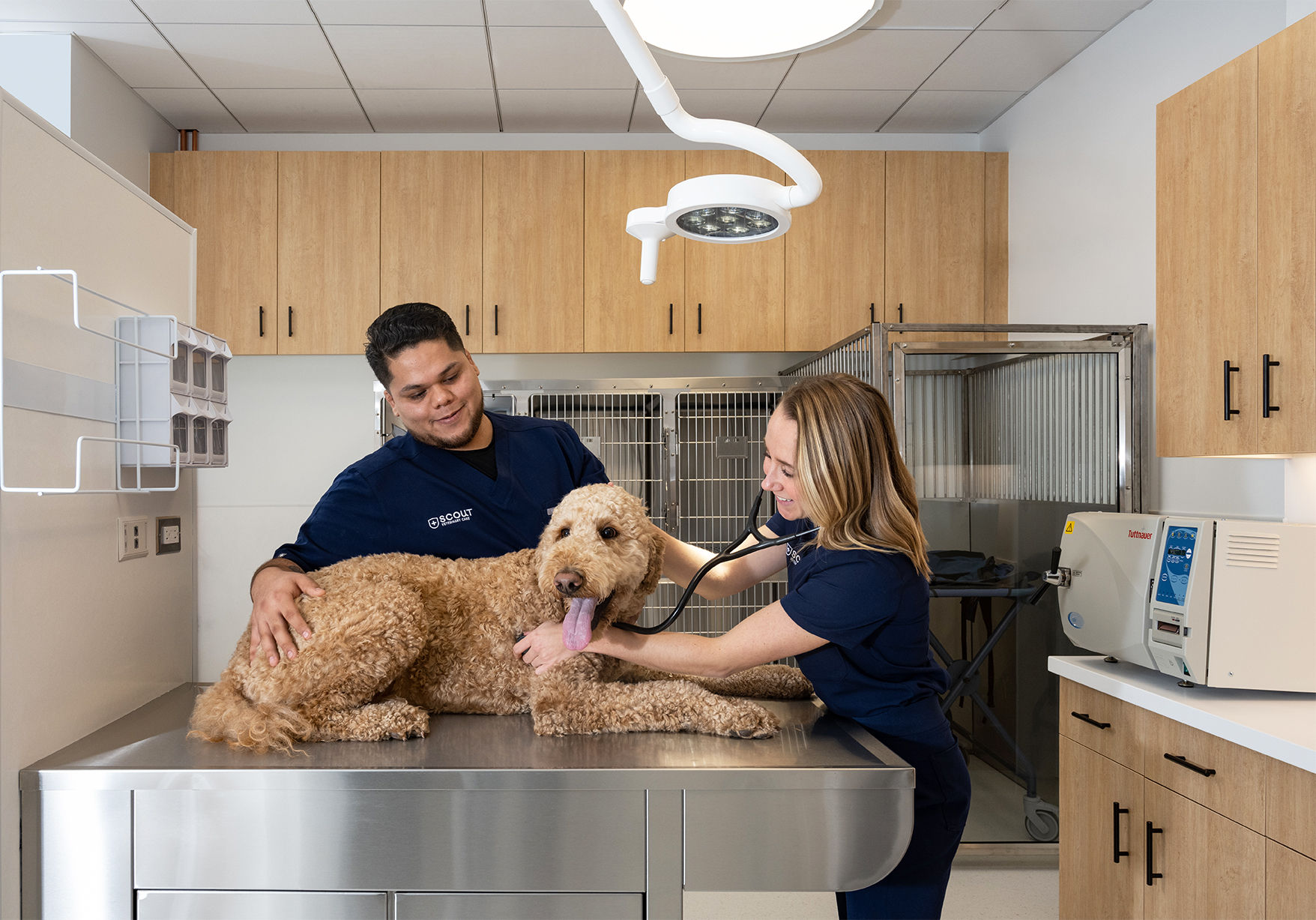
Your Scout veterinarian may recommend:

Cytology

The team may take a sample of the skin with a scrape or cotton swab to look at under the microscope. This helps narrow down the potential causes and be more direct with treatment.

Culture

Some skin infections are complicated and the standard treatment may not work. In this case, your Scout veterinarian may recommend a bacterial culture to help tailor the treatment specifically to your pet.

Bloodwork

If your Scout veterinarian thinks there could be an underlying health problem causing the hair loss, they may recommend starting with some bloodwork to look for hints of an issue. It is important to know that most endocrine diseases are diagnosed after a series of tests and that the initial screening may suggest but not definitely diagnose a problem.

Biopsy

While it’s not common, sometimes really stubborn skin issues are not diagnosed without a biopsy (sample of the skin).

Treatments

Your Scout veterinarian may recommend topical treatments, oral medications, or a combination of these to help control the itching and treat the underlying cause.

Follow Up Appointments

Provided that the treatment is working, a follow-up appointment may not be necessary. However, for complicated, stubborn or difficult cases, they may recommend additional evaluations. This is typically best accomplished with your primary care veterinarian but Scout can help you out if you don’t have a vet at the moment.
Book Appointment

Need care right away?

Trusted by thousands of Chicago pet owners.

OPEN NOW

Lincoln Park

2369 N Lincoln Ave,
Chicago, IL 60614
773-245-3108
Next Available Appointment:
Today (1/16/25)
@ 11:15 AM CST
Book Appointment
CLOSING SOON

West Loop

112 N. May St.
Chicago, IL 60607
773-249-2221
Next Available Appointment:
Today (1/16/25)
@ 5:15 AM CST
Book Appointment
CLOSED

Old Orchard

9410-A Skokie Blvd.
Skokie, IL 60077

847-603-2927
Next Available Appointment:
Tomorrow (1/17/25)
@ 7:15 AM CST
Book Appointment
COMING SOON

Wheaton

1962 S. Naperville Rd.
Wheaton, Il 60189
COMING SOON